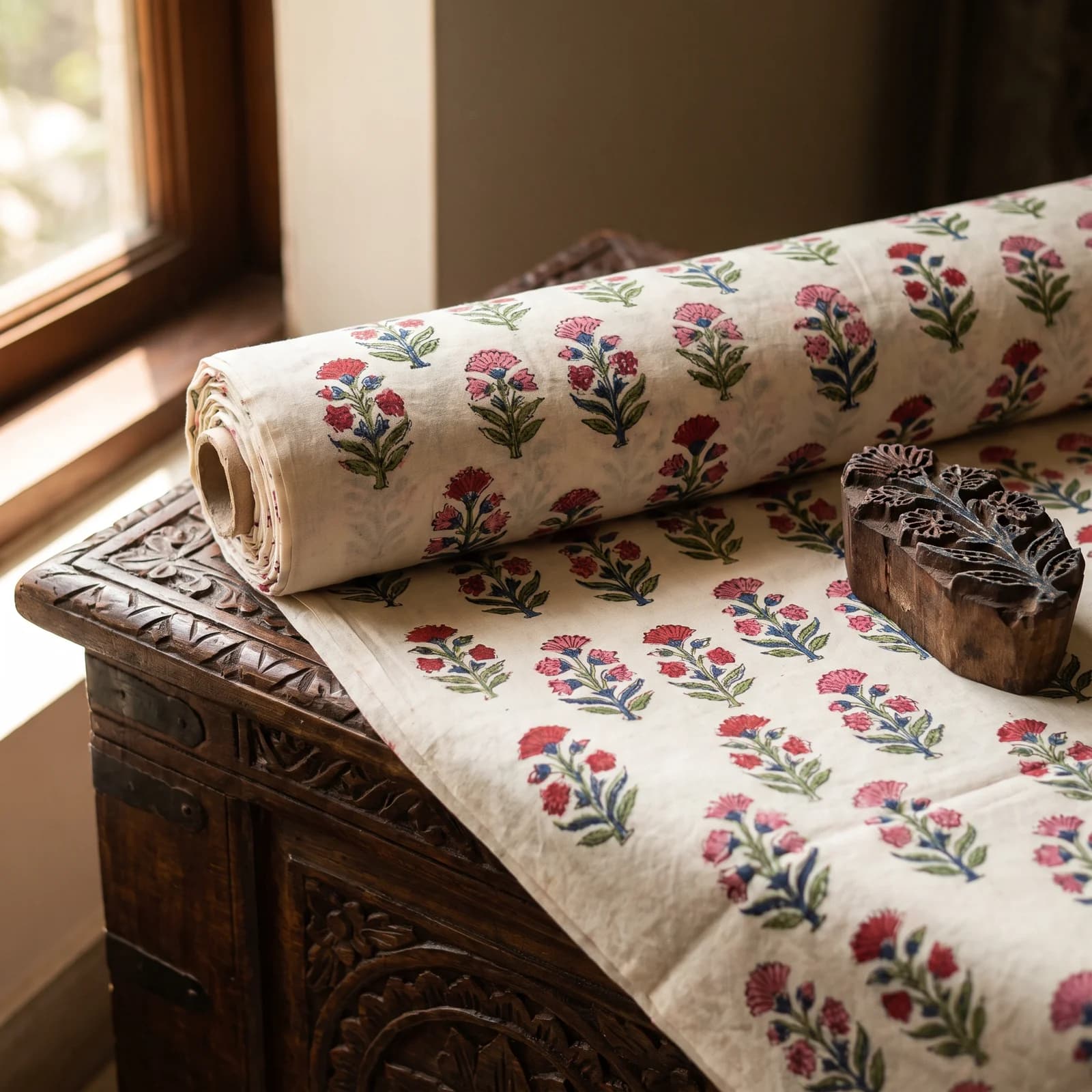
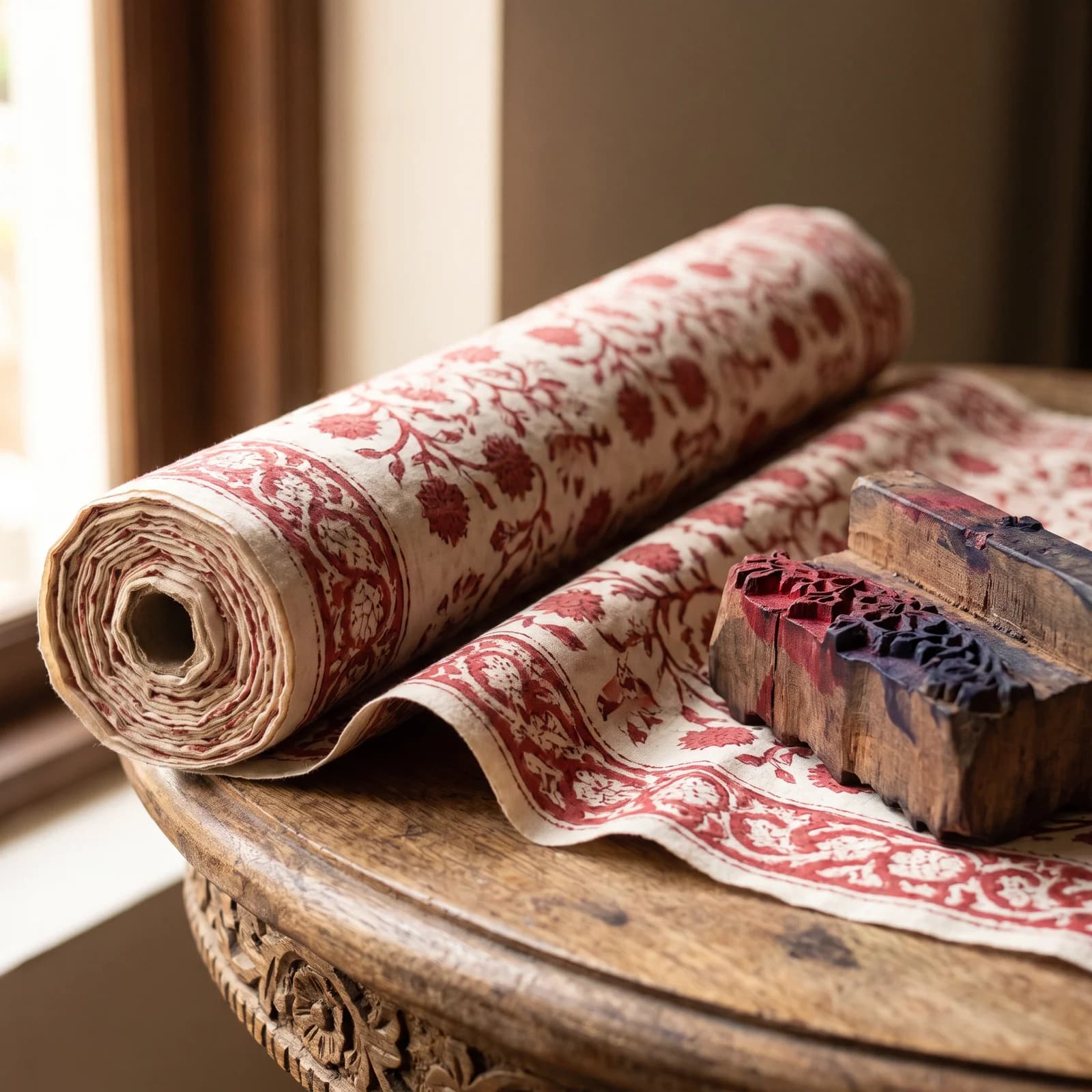
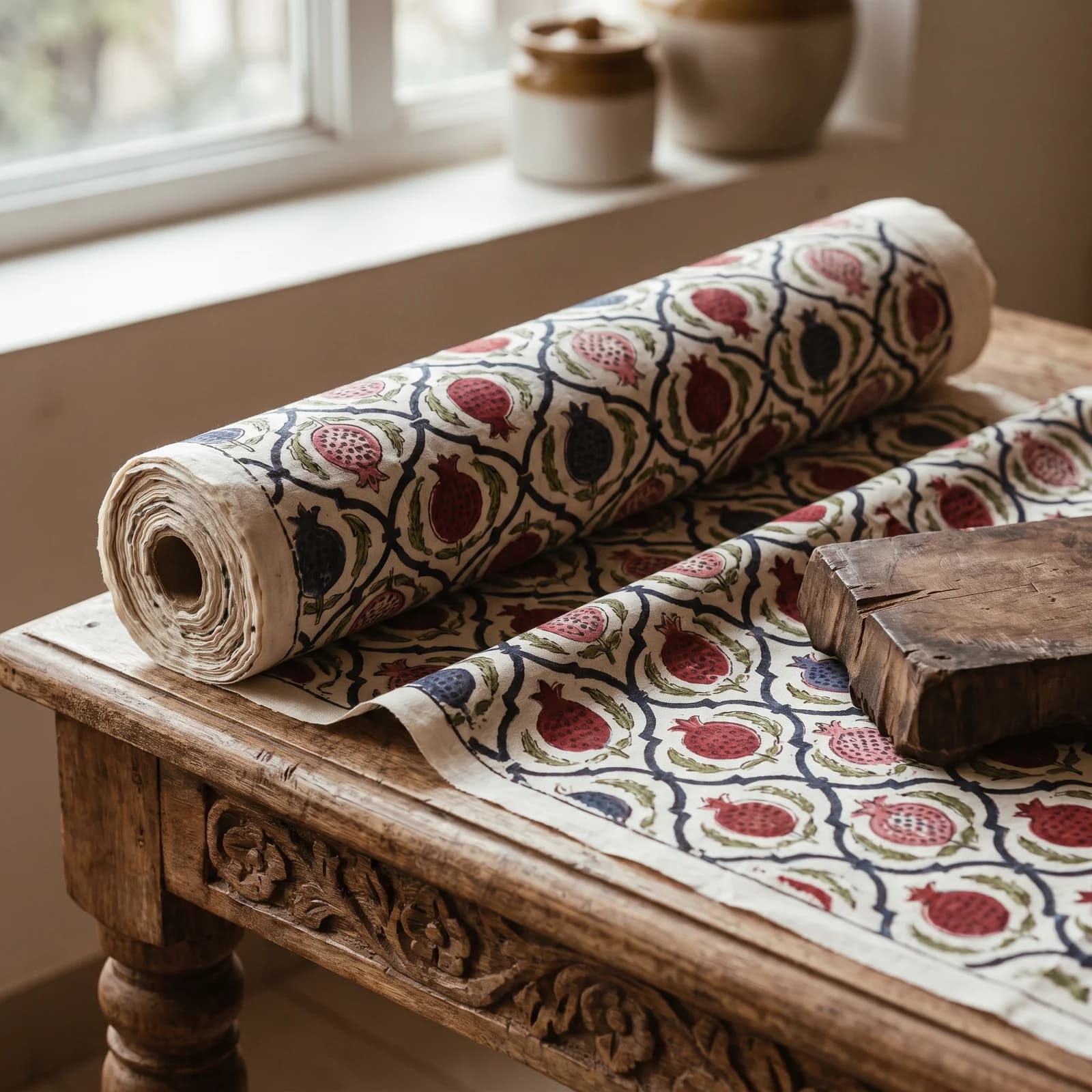
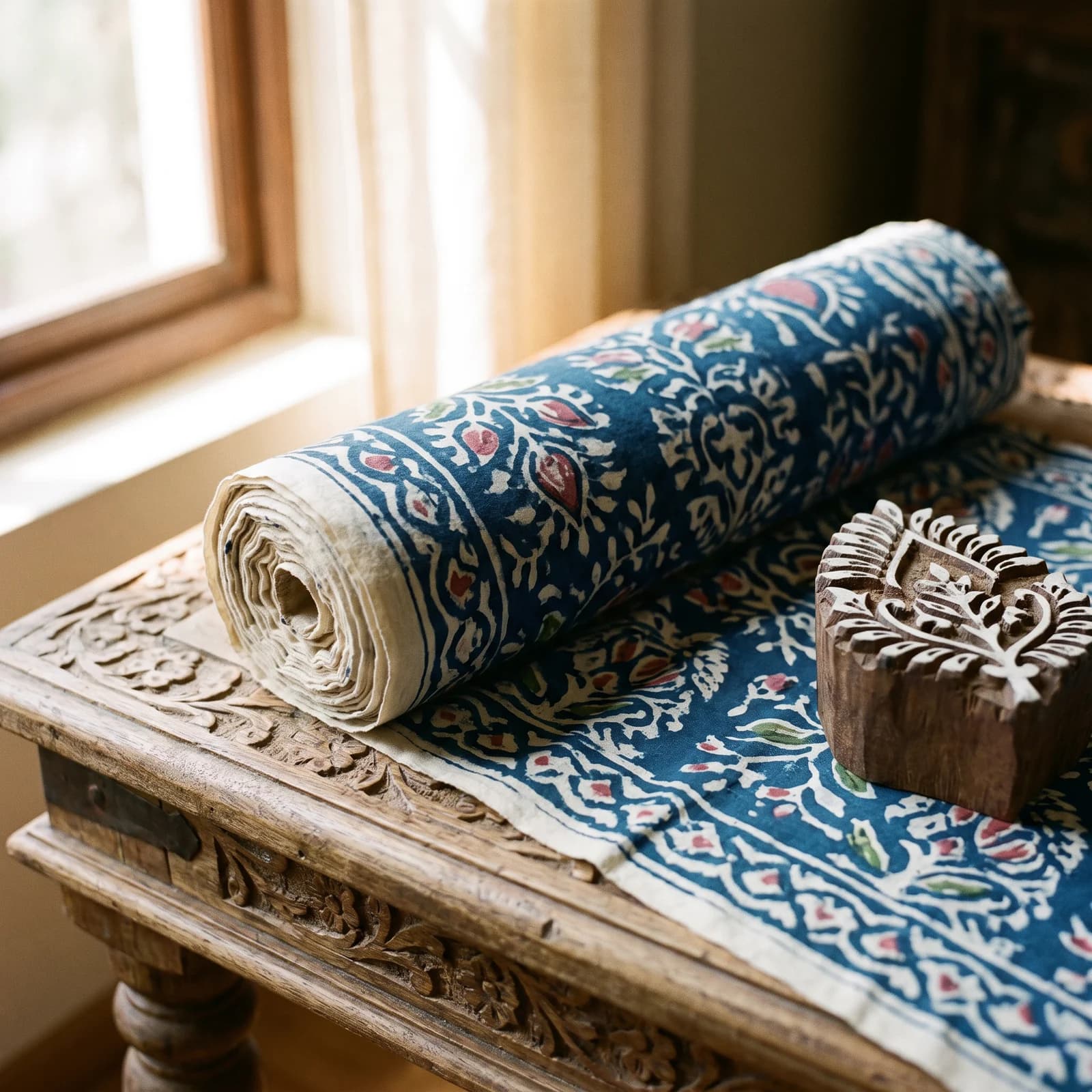
Mulmul Block Print Fabric — Peach Phool
❁ New — be the first to reviewGI-certified Sanganeri hand block print, stamped by Sanganer's printing families — ships with its GI certification note.
- Genuine mulmul (fine muslin) at ~85 GSM — the softest cloth we print
- Peach phool buti: gentle palette for summer and baby projects
- Breathable and skin-friendly; azo-free pigment dye
- Drapes beautifully for dupattas, sarees and swaddles
- The most affordable meter in the Sanganeri range
About this piece
Mulmul is fine Indian muslin — around 85 GSM, soft, airy and almost weightless — and this meter carries a peach phool (flower) buti hand-printed in Sanganer, Jaipur. Mulmul is the cloth of Jaipuri summers: dupattas, sarees, baby swaddles and loose kurtas that breathe through 45°C afternoons. Azo-free dye, 44-inch width, sold per meter from 1 m.
Specifications
How much fabric do you need?
A rough guide for 44 in (112 cm) wide fabric — your tailor may ask for a little more depending on pattern matching and your size.
How to wear
Take 2.5 m for a floaty dupatta, 5.5 m for a mulmul saree, or 1 m per baby swaddle. Mulmul softens further with each wash; wash cold on gentle, skip the dryer, and dry in shade. It needs only the lightest iron — or none.
Frequently asked
Is mulmul too sheer for a kurta?
Worn single-layer it is semi-sheer; most stitch it with a mulmul or cotton lining. For dupattas, swaddles and overlays the sheerness is the point.
Is this safe for babies?
Yes — azo-free dye on pure fine cotton, pre-washable to hospital-soft. Wash once in mild detergent before first use, as with any baby textile.
Does such light cloth survive hand block printing?
Mulmul has been block printed in Sanganer for generations; printers back it with extra table padding. The motif shows through almost fully on the reverse — your authenticity check.
What buyers are saying
No reviews yet — be the first to share your experience.