How to Wash & Care for Hand Block Print (Sanganeri) Fabric
Hand block print care means washing Sanganeri and natural-dye cotton in cold water, separately for the first one or two washes, with a mild pH-neutral detergent and no bleach, then drying it in shade inside-out. Gentle handling protects the azo-free or vegetable dyes and keeps the fabric's soft hand and colour for years.
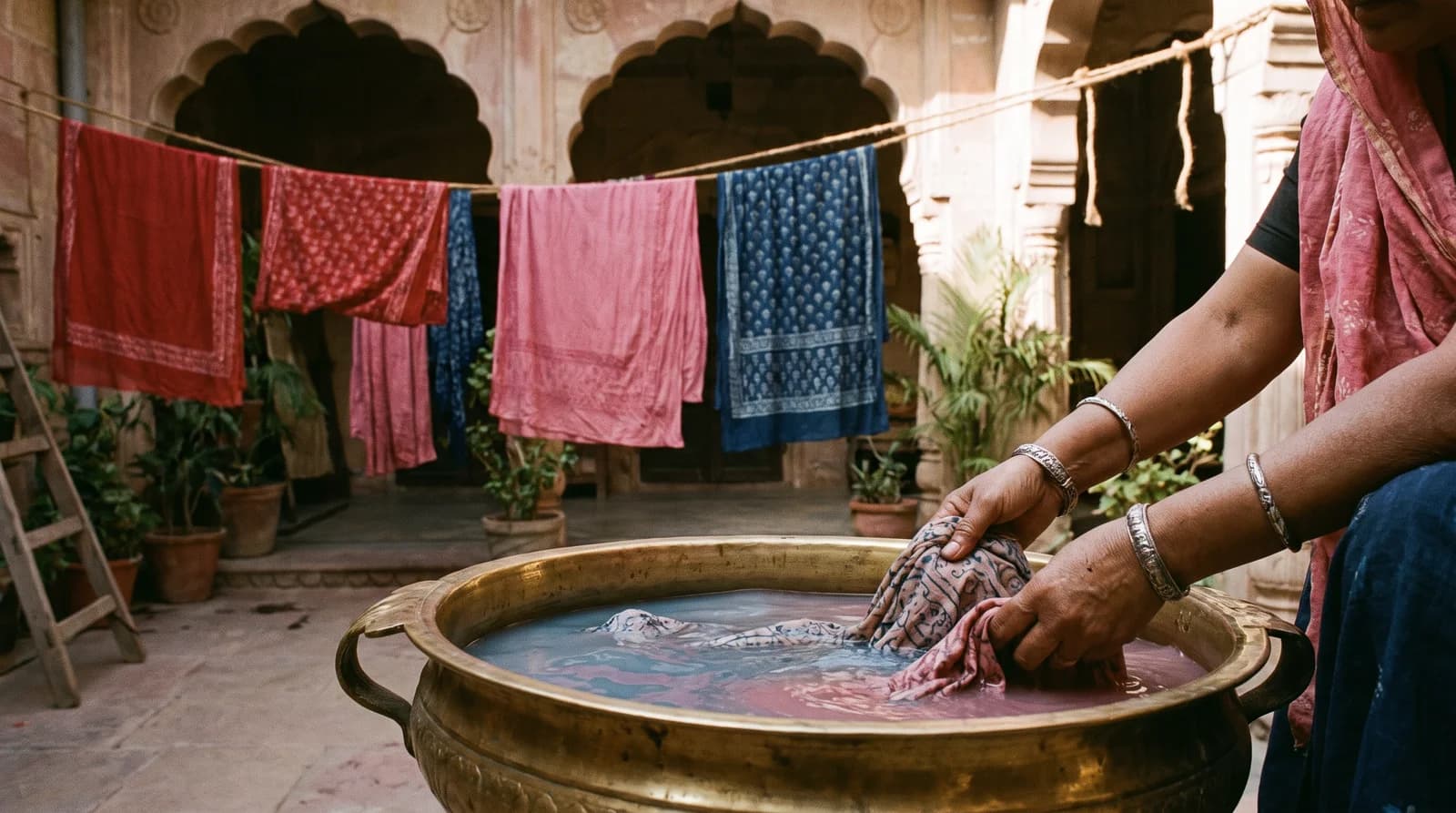
Why hand block print needs gentle care
Hand block print is printed on natural cotton or mulmul using azo-free pigment or natural vegetable dyes such as indigo and madder. These are real, breathable materials rather than plastic-coated synthetics, so they reward a little gentleness. Harsh detergents, hot water, bleach and strong sun are the four things that dull the colour and stiffen the soft hand you paid for. Treat the cloth kindly and a good Sanganeri piece stays bright and supple for many years.
It helps to know why some prints bleed badly and others barely at all. Properly fixed azo-free and natural dyes are bonded to the fibre and are safer and more colourfast than cheap, unfixed screen-print dye that simply sits on the surface of the cloth. When people complain that a block print bled everywhere, they have usually bought a mass screen print sold as handwork, not a correctly dyed hand block piece. If you are unsure which you own, our guide at /learn/sanganeri-vs-bagru-vs-screen-print explains how to tell them apart.
So the goal of all the steps below is simple: protect the dye and protect the cotton. A small amount of loose surface colour in the very first wash is normal and expected with natural dyes. What you want to avoid is stripping or fading the colour that is properly set into the fibre. The care routine is easy once you understand that distinction.
The crucial first wash
The first wash sets the tone for the life of the fabric. Natural and indigo dyes release a little loose surface colour on the first one or two washes. This is normal excess dye rinsing off, not a defect and not the colour failing. Handle this first wash correctly and the cloth settles down quickly.
- 1Wash it alone
Always wash a new block print piece separately for the first one or two washes, never with light-coloured or delicate clothes. Loose surface dye can transfer onto other fabrics in the same water.
- 2Use cold water only
Fill a basin with plain cold water. Hot water loosens more dye and can fade natural colours, so keep it cold for the first wash.
- 3Add salt or a little vinegar
Stir a spoon of common salt (or a small splash of mild white vinegar) into the first soak. This traditional tip helps set the colour and reduce further bleeding. Salt for most pieces; a little vinegar works well for indigo.
- 4Soak briefly, do not leave it long
Let the fabric rest in the water for only a few minutes. Never leave a natural-dye piece soaking for a long time, as prolonged soaking pulls out more colour rather than less.
- 5Rinse gently and skip the detergent
For the very first wash you often need no detergent at all, or only a tiny amount of mild soap. Rinse in fresh cold water until the water runs mostly clear, then move straight to shade drying.
If you see faint colour in the first rinse water, do not panic. That is the loose surface dye leaving, exactly as it should. By the second or third wash the water runs clear and the piece is stable for normal use.
Routine washing: the do and don't table
Once the first washes are done, everyday care is straightforward. The whole routine comes down to cool water, a mild detergent, no bleach, and gentle handling. Keep this simple checklist in mind and you will not go wrong.
| Step | Do | Don't |
|---|---|---|
| Water | Cold or lukewarm, below 30°C | Hot water, which fades and loosens dye |
| Detergent | Mild, pH-neutral or gentle liquid | Harsh powders or strong stain removers |
| Bleach & brighteners | Skip them entirely | Chlorine bleach or optical-brightener detergents |
| By hand | Hand wash gently, turn inside-out | Scrub, twist or brush the printed surface |
| By machine | Gentle or delicate cycle, inside-out, cold | Long heavy cycles or high-speed hot washes |
| Sorting | Wash with similar colours | Mix with whites or delicates early on |
| Wringing | Press water out softly | Wring or twist hard, which cracks the print |
A light-touch machine wash is fine for most cottons after the first hand washes: turn the piece inside-out, use a gentle or delicate cold cycle and a mild liquid detergent, and avoid a fierce spin. Mulmul (fine muslin) and lightweight voile are more delicate, so hand washing is always the safer choice for those. When in doubt, hand wash.
Drying, ironing and storage
How you dry and store the fabric matters almost as much as how you wash it. Direct, harsh sun is the biggest avoidable cause of fading in natural-dye cloth, so this is where a little care pays off most.
- 1Dry in shade, inside-out
Hang the piece in shade or indirect light with the printed side facing in. Harsh direct sun fades natural and indigo dyes over time, so never dry a coloured block print in full midday sun.
- 2Do not wring hard
Press or squeeze the water out softly and let it drip. Hard wringing stresses the cotton and can crack the printed motif along fold lines.
- 3Iron on the reverse, medium heat
Iron inside-out on a medium setting while the fabric is slightly damp. Steam is fine. Ironing on the reverse protects the pigment surface and gives a crisp finish.
- 4Store dry and breathable
Keep pieces in a dry, breathable cotton or muslin bag. Avoid sealed plastic for long storage, as trapped moisture invites mildew and musty smells; cotton lets the fabric breathe.
- 5Guard against damp and insects
Store away from damp to prevent mildew, and tuck in a few neem leaves or cloves as a natural moth and insect deterrent instead of chemical mothballs.
For pieces you use rarely, air them out and refold along a different line once or twice a year. That keeps permanent crease marks from setting into the same spot and keeps the cloth fresh in storage.
Care notes by product type
The core rules stay the same, but a few product types have their own quirks worth knowing before you wash or stitch them.
| Running fabric | Pre-wash the cloth before stitching so it shrinks first. Cotton can shrink about 3–5%, so pre-washing avoids a garment tightening later. Shop fabric at /category/sanganeri-fabric. |
| Bedsheets | Wash separately for the first one or two washes, cold water, mild detergent, dry in shade. See the buying guide at /learn/jaipuri-bedsheet-buying-guide and shop /category/block-print-bedsheets. |
| Mulmul dohar | Fine muslin is delicate: gentle cold hand wash or delicate machine cycle, no wringing, dry flat or over a wide line. Browse /category/mulmul-dohar. |
| Razai & dohar covers | Spot-clean small marks, or gentle cold wash the cover and dry flat so the filling stays even. Compare types at /learn/razai-vs-dohar-vs-ac-quilt. |
| Heavy Jaipuri razai | Dry-clean a heavy cotton-filled razai if it needs a full clean, rather than soaking it. Shop /category/jaipuri-razai-quilts. |
| Natural-dye pieces | Extra gentle: cold water, shade drying, no bleach ever. See the edit at /collection/natural-dye-collection. |
Two rules cover almost every situation. First, always pre-wash running fabric before cutting and stitching so any shrinkage happens before the garment is made. Second, when a razai or filled quilt is genuinely dirty rather than just needing a freshen-up, dry-clean it instead of washing the whole thing at home. Everything else is the same gentle cold-water routine used for the rest of your block prints.
Frequently asked
Last reviewed: 17 May 2026 · Verified by the Sanganeri print desk
Do block prints fade?
Well-made hand block prints with azo-free or natural dyes are colourfast for normal use and fade only slowly, mostly from harsh sun and hot washing. Natural and indigo dyes may release a little loose surface colour in the first one or two washes, which is normal excess dye, not fading. Wash cold, dry in shade, and skip bleach and the colour holds for years.
Why did my block print bleed so badly?
Heavy, continuous bleeding usually means the piece is a cheap screen print with unfixed surface dye, not a correctly dyed hand block print. Properly fixed azo-free and natural dyes are bonded to the fibre and only shed a little loose colour in the first wash. If yours ran badly, wash it alone in cold water with a spoon of salt, and check our guide at /learn/sanganeri-vs-bagru-vs-screen-print to see what you actually have.
Can I machine wash block print?
Yes, most block print cotton is machine-washable after the first hand washes. Turn the piece inside-out, use a gentle or delicate cold cycle with a mild liquid detergent, and avoid a fierce spin, bleach and hot water. Delicate mulmul (muslin) and voile are safer hand-washed. When in doubt, hand wash gently in cold water.
Does salt stop colour bleeding?
A spoon of common salt (or a small splash of mild vinegar) in the first cold soak is a traditional tip that helps set the dye and reduce bleeding, especially on natural and indigo colours. It will not fix a poorly made screen print that sheds dye continuously, but for genuine hand block print it helps the loose surface colour settle faster. Use salt for most pieces and a little vinegar for indigo.
How do I wash block print for the first time?
Wash it alone in cold water, add a spoon of salt or a splash of mild vinegar, and soak for only a few minutes. Use little or no detergent, rinse gently in fresh cold water until it runs mostly clear, and never leave it soaking for long. Then dry it in shade, inside-out, without hard wringing. A little colour in the first rinse is normal loose dye.
Can I dry clean a razai?
Yes. For a heavy cotton-filled Jaipuri razai that is genuinely soiled, dry cleaning is the safest option rather than soaking the whole quilt at home. For light marks, spot-clean instead, and for a lightweight cover you can gentle cold wash it and dry flat so the filling stays even. See /learn/razai-vs-dohar-vs-ac-quilt to identify your quilt type first.
Reviewed by the Sanganeri print desk
Written and reviewed with Sanganer's printing families. Every piece we make is GI-certified Sanganeri hand block print, stamped with azo-free dyes in Sanganer, Jaipur. Last updated 12 July 2026.