Sanganeri Print Suits: How to Choose the Fabric, Spot Hand Block and Judge a Fair Price
A Sanganeri print suit is a set of fine, floral hand block printed cotton made in Sanganer, near Jaipur, sold as an unstitched three-piece set, a stitched kurta set or a kurti. Good buys start with the fabric: cotton for everyday wear, silk-cotton for festive occasions and mulmul for light summer days. Check the reverse of the cloth, ask whether the print is hand block or screen, and wash the fabric once before stitching.
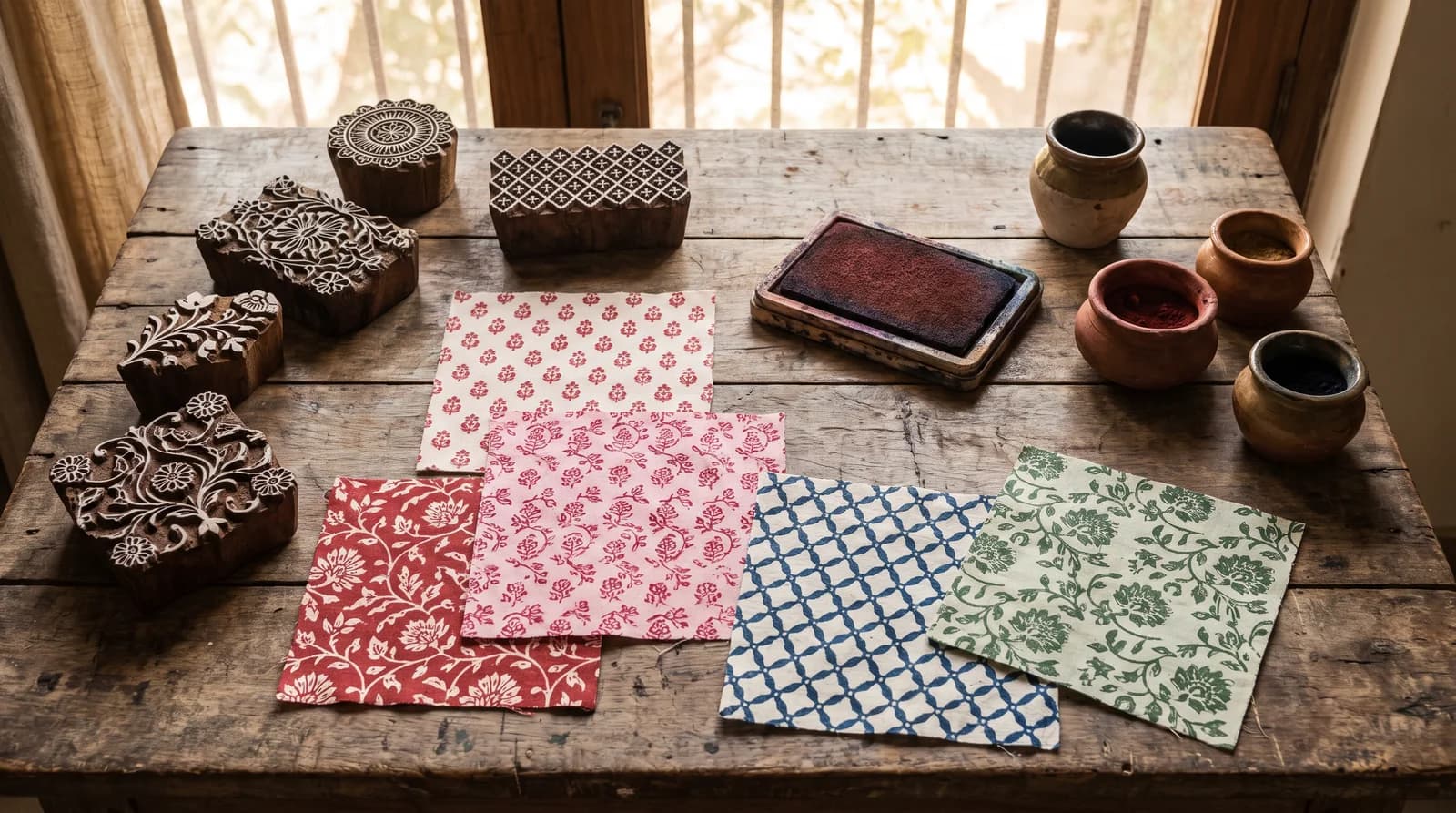
What is a Sanganeri print suit?
A Sanganeri print suit is a cotton outfit printed by hand with carved wooden blocks in the Sanganeri style: fine floral buti and buta motifs on a white or cream ground. The name describes the print, not the cut. The same print appears on unstitched three-piece sets, stitched kurta sets, kurtis, men’s shirts and dress material.
Because the block is pressed through the cloth, the design shows on the back too. A printed fabric with a flat, mechanical repeat is a different product, even when it is sold under a similar name. So learn how the suit is made first, and then learn how to check it.
Cotton, silk-cotton or mulmul: which fabric should you pick?
The base cloth changes how a suit feels, drapes and cares. Three bases come up most often in the Sanganeri range.
| Fabric | Best for | Feel | Care note |
|---|---|---|---|
| Cotton | Office, travel and daily kurta wear | Crisp, breathable, sturdy | Forgiving in wash and iron |
| Silk-cotton | Festive wear, puja and evening events | Soft sheen, heavier drape | Gentle wash, cool iron on the reverse |
| Mulmul (muslin) | Hot-weather days and light summer dressing | Very light, airy, soft | Creases easily, needs careful handling |
If you are not sure, start with cotton. It is the most forgiving fabric for a first Sanganeri purchase. Mulmul is lovely in summer but shows creases, so it suits a relaxed fit better than a tight one. Silk-cotton carries the festive weight. Read the fabric line on each product page before you buy, because the listing names the base cloth.
Unstitched set, stitched kurta or fabric by the metre?
The format decides how much work is left after you buy. An unstitched set is cloth for a tailor, so you pay for stitching separately and choose the cut. A stitched kurta or kurti is ready to wear, and the kurti comes in sizes from S to XXL. Dress material is a length of cloth, such as the 2.5 m churidar length in the Grey Bel set. Current listed prices are below.
| Sanganeri Print Suit Set (Unstitched 3-Piece), Pink Buti | ₹2,499 (bestseller) |
| Sanganeri Print Suit Set (Unstitched 3-Piece), Indigo Jaal | ₹2,499 |
| Silk-Cotton Festive Red suit set | ₹3,999 |
| Block Print Kurti (stitched, S to XXL), Chidiya Sage | ₹1,799 |
| Block Print Kurta Set (stitched), Anar Ivory | ₹2,999 |
| Mens Sanganeri Block Print Shirt, Ivory Buti | ₹1,999 |
| Block Print Dress Material (2.5 m churidar), Grey Bel | ₹1,899 |
Fabric is also sold by the metre in 0.5 m steps. If you want to see the print before committing to a full set, order a 0.5 m swatch first. Check it in daylight, feel the cloth, and turn it over to see the reverse.
How do you spot a real hand block print?
A photo cannot prove handwork, but the cloth gives clear clues. Real hand block print carries small, consistent imperfections. Machine print is flawless and identical from edge to edge. Use these checks in the shop, or ask the seller to confirm them.
- 1Turn it over
Hand block colour penetrates the fabric, so the motif shows faintly on the reverse. This is the do-rukhi look. A screen print is uniform on the front and largely blank on the back.
- 2Look for slight misregistration
Where two colours meet, the outline and the fill may sit a fraction apart. Perfect alignment across every repeat is a machine signal.
- 3Find the block-join line
Blocks are carved in sections, so a faint join line appears roughly every 9 to 12 inches. Its presence is an honest sign of the hand.
- 4Check repeats for small variation
Each stamp is pressed separately, so two buti of the same motif rarely match exactly. Expect small differences, not identical clones.
- 5Read the label
Honest sellers say plainly what is hand block and what is not. sanganeri.in labels exactly which products are hand block and which are not, so you know what you are buying.
Be cautious of a very low price on a piece sold as Sanganeri that shows a perfectly even, mirror-like repeat on the back. Hand block printing takes skilled labour at every stage, so a machine-level price is a question to ask the seller.
What should you tell your tailor about block print?
A block print suit needs a little more care at the cutting table than plain cloth. Give your tailor these instructions before the first cut.
- 1Pre-shrink the cloth
Wash the fabric once before cutting, in cold water, and dry it in shade. Printed cotton can relax slightly on first wash, and a pre-wash keeps the finished garment from changing size after you wear it.
- 2Match the motif across the front
Ask the tailor to place the buti or buta so the front panels and sleeves read as one design. Repeats vary slightly, so a little trimming may be needed.
- 3Line up the set before cutting
For a three-piece set, lay the top, bottom and dupatta side by side before cutting, so the print lines and colours match in daylight.
- 4Choose thread and hems with care
Use thread close to the print colour and a neat, soft hem, especially on mulmul. A tight or heavy seam can pucker light cloth.
- 5Press from the reverse
Iron on the wrong side on a low to medium setting. Direct heat on the printed face can dull the colour over time.
How should you care for a Sanganeri print suit?
Most print damage happens in the wash, so set the routine on day one. The basics are simple: wash the first time cold and separately, dry in shade, and reverse-iron.
- 1First wash, cold and alone
Wash the suit in cold water, separately from other clothes, the first time. Natural-dye and hand-printed cloth can release a little excess colour in early washes, which is normal.
- 2Use a mild detergent
Avoid harsh and bleach-based products on the print.
- 3Dry in shade
Dry in shade, inside out if you can. Long direct sun is hard on any print over time.
- 4Reverse-iron
Iron on the reverse side. This protects the surface of the print and keeps the colour looking clean.
For a fuller washing routine, see our block print care and washing guide.
What does a fair price look like?
There is no single correct price, because cloth, dye, set size and block carving all differ. What you can judge is whether the price fits the handwork. Hand block printing means carving the blocks, a printer working each colour by hand, then fixing, washing and drying. Those steps take time, which is why a hand block set is not priced like a screen print.
Use three tests. First, does the seller say which products are hand block and which are not? Second, does the price suit the format, so a dress-material length and a stitched kurta set are judged on their own terms? Third, is the pricing consistent across similar fabrics? A price that falls far below the rest of a range, with the same print claimed as handwork, is worth questioning.
The best value is the set whose fabric, fit and print you will wear most. Check the product page for current stock before you order.
Frequently asked
Last reviewed: 17 May 2026 · Verified by the Sanganeri print desk
Are Sanganeri print suits hand block printed?
Sanganeri print is a hand block craft, so genuine pieces are printed by hand with carved wooden blocks in the Sanganer tradition. Not every product on a store is hand block, though. Honest sellers label each item clearly. Check the product title and description, and turn the cloth over to see whether the colour shows on the reverse.
Should I buy an unstitched set or a stitched kurta set?
Buy an unstitched set if you want a custom fit and a tailor's finish, and budget for stitching separately. Buy a stitched kurta set or kurti if you want to wear it straight away. Stitched kurtis come in sizes from S to XXL where the listing offers them, so check the size range before ordering.
Is mulmul or cotton better for a Sanganeri suit?
Cotton is the better all-rounder. It is sturdy, breathable and easy to care for, so it suits daily and office wear. Mulmul is lighter and softer, ideal for hot weather, but it creases and needs careful handling. Pick mulmul for a relaxed summer look and cotton if you want a low-fuss suit.
Can I order a swatch before buying a full suit?
Yes. Fabric is sold by the metre in 0.5 m steps, so you can order a 0.5 m swatch first. Use it to check the colour in daylight, the feel of the cloth and the print on the reverse side. It is a practical way to compare a few prints before you commit to a full set.
Should I wash the fabric before stitching?
Yes. Wash the cloth once in cold water and dry it in shade before cutting. This is general craft advice for printed cotton, which can relax slightly on first wash. A pre-wash helps the finished garment keep its size after the first wash.
Why does a hand block suit cost more than a screen print?
Hand block printing takes skilled labour at each stage: carving the blocks, printing each colour by hand, then fixing, washing and drying. A screen print is faster because machines do most of the repetition. The price gap reflects that work, so approach a suspiciously cheap hand block claim with care.
How do I wash a block print suit at home?
Wash it cold and separately the first time, using a mild detergent. Avoid harsh or bleach-based products. Dry in shade, ideally inside out, and iron on the reverse side. Natural-dye cloth may release a little colour in early washes, which is normal. Our block print care and washing guide covers the details.
What is the do-rukhi look?
Do-rukhi means printed on both sides. In hand block printing the colour penetrates the cloth, so the motif shows faintly on the reverse. Sanganer printers have long been known for this clean two-sided result. If the back of a suit is blank and the front is perfectly even, it is probably not hand block.
Reviewed by the Sanganeri print desk
Written and reviewed with Sanganer's printing families. Every piece we make is GI-certified Sanganeri hand block print, stamped with azo-free dyes in Sanganer, Jaipur. Last updated 13 October 2026.